
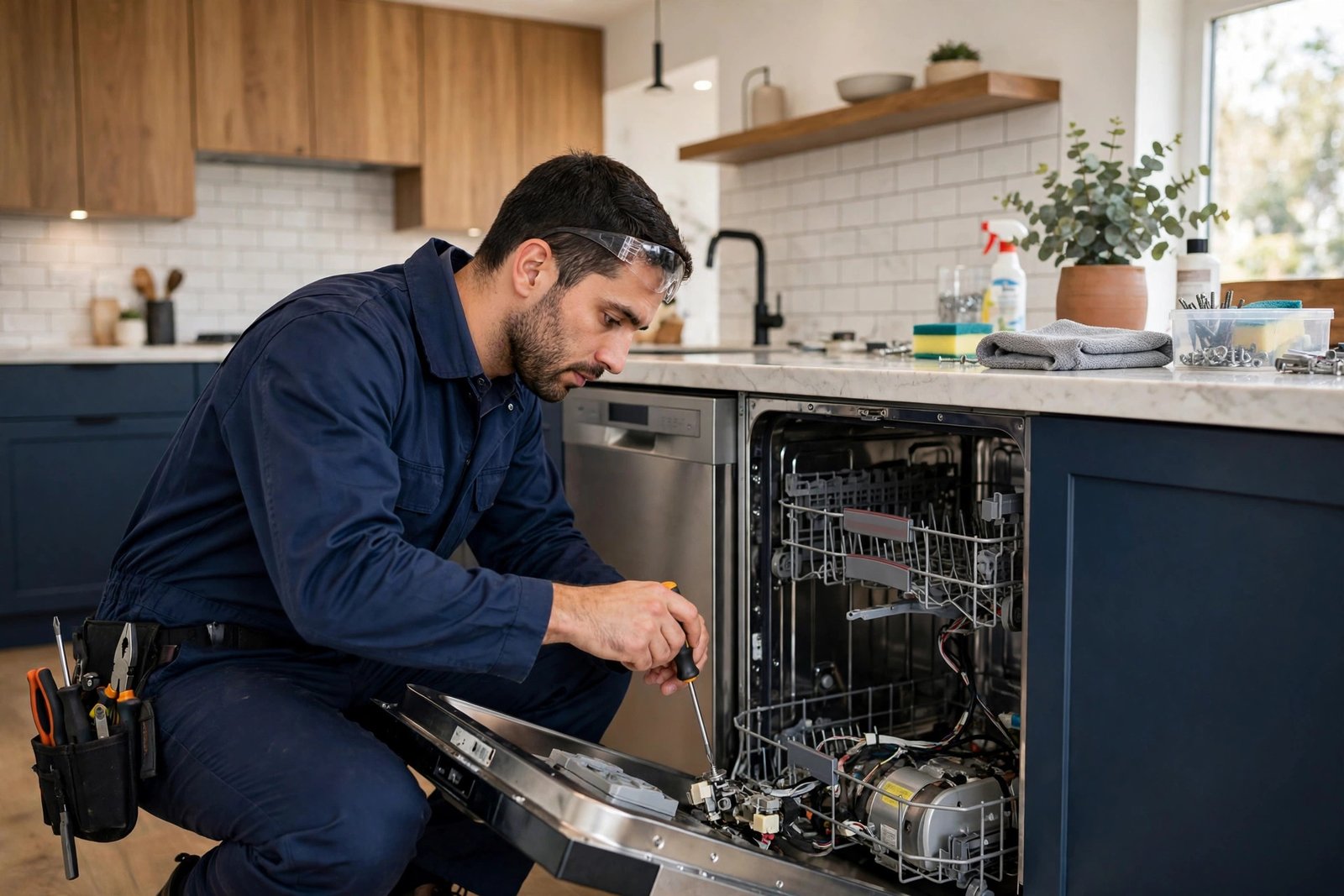
Dishwasher Leaving Dishes Dirty? 8 Causes and Fixes
A dishwasher that runs a full cycle and leaves gritty, spotted, or food-caked dishes isn’t doing its one job. Work through these eight causes before assuming it needs a technician — half of them are five-minute fixes.
Diagnosis table
| Symptom | Most likely cause | Fix |
|---|---|---|
| Gritty residue on everything | Clogged filter | DIY — clean the filter |
| Top rack dirty, bottom fine | Blocked spray arm or overloading | DIY — rearrange, clear arm |
| White film/spots | Hard water | DIY — rinse aid + cleaner |
| Food particles baked on | Not scraping plates (not pre-rinsing — just scraping) | Habit change |
| Dishes wet at end | Rinse aid empty or heated-dry off | DIY |
| Bad smell + poor cleaning | Filter and seal buildup | DIY deep clean |
| Standing water at bottom | Clogged drain or garbage disposal issue | DIY, then pro |
| Nothing improves after all above | Failing pump or heating element | Pro |
1. Clean the filter (the #1 fix)
Modern dishwashers have a removable cylindrical filter at the tub floor. Twist it out monthly and rinse it under hot water, scrubbing with a soft brush. A clogged filter recirculates dirty water onto clean dishes — and it’s the single most common cause of poor cleaning.
2. Check the spray arms
Spin both spray arms by hand. If they catch or don’t rotate freely, something’s blocking them. Pull them off (they usually twist or clip off) and clear the jet holes with a toothpick — mineral deposits love to clog them.
3. Stop overloading
Dishes nested together block water from reaching surfaces. Bowls should angle downward, nothing should block the spray arms’ rotation, and tall items shouldn’t shield the top rack. When in doubt, run two smaller loads.
4. Fight hard water
Howard County has moderately hard water. White film is mineral deposits, not dirt. Keep the rinse-aid dispenser full, run an empty hot cycle with a dishwasher cleaner monthly, and consider a whole-home softener if film persists everywhere in the house.
5. Scrape, don’t rinse
Modern detergents need some food soil to activate their enzymes — fully pre-rinsed dishes can actually come out dirtier. Scrape off chunks, leave the residue.
6. Check water temperature
Dishwashers need 120°F water minimum. Run the kitchen tap until it’s hot before starting the dishwasher, so the first fill isn’t cold. If your water heater is set below 120°F, that’s a double problem (and a Legionella consideration — keep it at 120°F, not lower).
7. Clear the drain path
Standing water means the dishwasher can’t drain — check the garbage disposal first (run it; a clogged disposal backs up into the dishwasher), then the drain hose for kinks. Persistent standing water needs a technician.
8. When it’s the machine
If the filter’s clean, arms spin, loading is right, and dishes are still dirty — suspect the circulation pump or a failing heating element (dishes won’t get clean in lukewarm water). That’s a pro diagnosis.
Dishwasher still underperforming in Columbia, MD? We fix it right the first time.