
Refrigerator Not Cooling? 8 Common Problems and How to Fix Them
A refrigerator that suddenly stops cooling can turn an ordinary day into an expensive headache. Milk spoils, vegetables lose freshness, and frozen food starts melting. Before calling an appliance repair technician, there are several things you can inspect safely at home.
In many cases, refrigerator cooling problems develop because of simple issues. A loose power connection, incorrect thermostat setting, dirty condenser coils, or blocked air vents can affect performance. Fortunately, some of these problems require only basic adjustments.
However, not every cooling failure has an easy solution. A damaged evaporator fan, faulty compressor, defective thermostat, or refrigerant leak may require professional attention. Understanding the warning signs helps you avoid unnecessary repairs and make better decisions.
This guide explains eight common reasons your refrigerator isn’t cooling properly. You’ll learn how to identify each problem, what you can safely check, and when to contact a qualified appliance repair professional in the United States.
Why Is Your Refrigerator Not Cooling?
A refrigerator relies on several connected components to maintain a stable temperature. The compressor circulates refrigerant while the condenser releases heat outside the appliance. Meanwhile, evaporator coils absorb heat from inside the refrigerator and fans distribute cold air throughout the compartments.
When one component stops working correctly, the entire cooling process can suffer. Sometimes the freezer continues working while the refrigerator compartment becomes warm. This usually points toward an airflow problem rather than a complete cooling-system failure. Identifying this difference can save considerable diagnostic time.
Before inspecting anything, remember that refrigerators contain electrical components and moving parts. Always disconnect power before cleaning accessible components or performing maintenance. Never remove sealed-system covers or handle refrigerant lines without proper training.
1. Check the Refrigerator Power Supply and Electrical Outlet
First troubleshooting step
An interrupted power supply is one of the simplest explanations for a refrigerator that suddenly stops cooling. The appliance may appear completely dead or its interior light and digital display may work inconsistently. A partially disconnected plug, tripped circuit breaker, damaged cord, or faulty electrical outlet can interrupt normal operation. Therefore, begin by checking the electrical connection before investigating expensive mechanical components.
Carefully inspect the power cord and make sure the plug sits firmly inside the wall outlet. Check your home’s electrical panel for a tripped breaker. If the outlet appears damaged, feels unusually warm, or produces a burning smell, stop using it and contact a qualified electrician. Avoid extension cords and power strips unless the manufacturer specifically approves them. Many refrigerators require a properly grounded, dedicated electrical connection.
2. Adjust the Refrigerator Temperature Settings
Check the thermostat and control panel
Incorrect temperature settings can make your refrigerator seem defective even when its cooling system operates normally. Someone may accidentally change the thermostat while moving groceries or cleaning the control panel. Certain models also include vacation mode, showroom mode, or cooling-off settings that affect normal operation. Check the owner’s manual to understand the controls before changing anything.
For most household refrigerators in the United States, the recommended refrigerator temperature is 40°F or below. The freezer should generally remain at 0°F. These settings help preserve food quality while limiting harmful bacterial growth. After adjusting the thermostat, allow sufficient time for temperatures to stabilize. Use an independent appliance thermometer rather than relying entirely on the digital display.
| Refrigerator compartment | Recommended temperature |
|---|---|
| Fresh food section | 37°F (approximately) |
| Maximum safe refrigerator temperature | 40°F |
| Freezer compartment | 0°F |
3. Inspect the Refrigerator Door Seal for Air Leaks
Examine the rubber door gasket
A damaged door gasket can quietly undermine your refrigerator’s cooling performance. This flexible rubber strip creates an airtight barrier between the refrigerator compartment and surrounding room air. When the gasket becomes loose, cracked, twisted, or dirty, warm air enters the appliance. Consequently, the compressor works harder while the refrigerator struggles to maintain its target temperature.
Fortunately, you can perform a simple paper test without special equipment. Place a piece of paper between the door and refrigerator frame before closing the door. Gently pull the paper outward. If it slides out without resistance, the seal may be weak in that particular area. Repeat this test around different sections of the door. Clean dirty gasket surfaces with mild soap and warm water. Replace a damaged refrigerator door gasket when cleaning cannot restore a proper seal.
4. Clean Dirty Condenser Coils and Remove Dust
Improve heat release and cooling efficiency
Dirty condenser coils are a frequently overlooked cause of poor refrigerator performance. These coils release heat absorbed from the refrigerator’s interior into the surrounding air. Over time, dust, pet hair, kitchen grease, and other debris collect around their surfaces. This buildup restricts heat transfer and forces the cooling system to work harder.
First, locate the condenser coils by checking your appliance manual. Depending on the model, they may sit underneath the refrigerator or behind a lower access panel. Disconnect electrical power before cleaning. Use a refrigerator coil brush or vacuum attachment to remove loose debris carefully. Never bend the refrigerant tubing or damage electrical connections. Some newer refrigerators feature enclosed condenser systems that require different maintenance procedures.
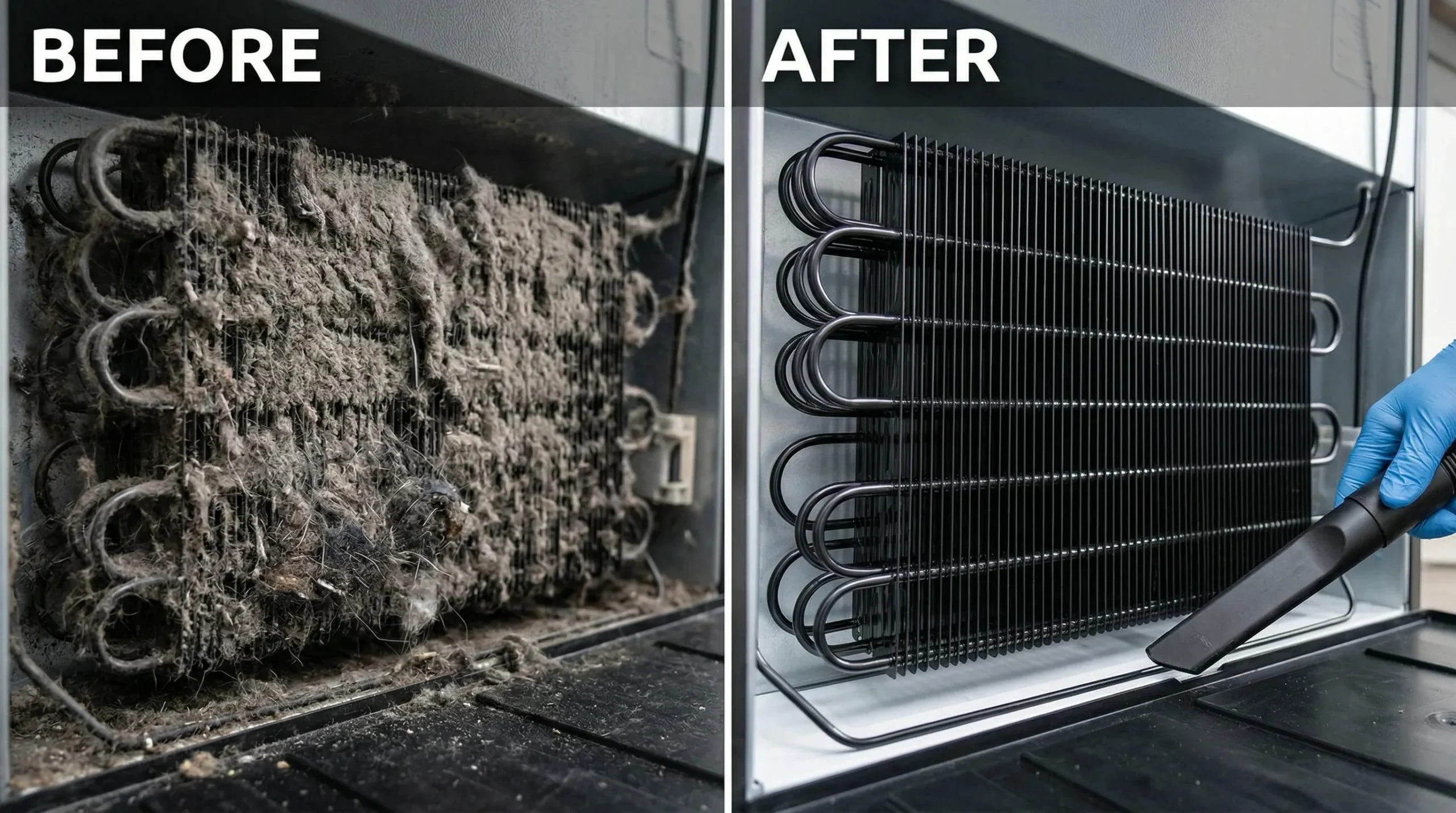
Cleaning frequency depends on the appliance design and household conditions. Homes with pets or heavy dust accumulation may need more frequent maintenance. Check the manufacturer’s maintenance recommendations rather than assuming every refrigerator follows the same cleaning schedule.
5. Remove Food Blocking the Air Vents
Restore proper airflow inside the refrigerator
Overcrowding shelves can create an unexpected cooling problem. Refrigerators depend on continuous air circulation to distribute cold air evenly between different sections. Large containers, grocery bags, food packages, and improperly positioned shelves can block the air vents. When cold air cannot move freely, certain areas become warmer while others remain excessively cold.
Start by identifying the air vents inside your refrigerator and freezer compartments. Their positions vary between manufacturers and models. Move containers away from these openings and avoid packing groceries tightly against the rear interior wall. Leave enough space for cold air to circulate around food. Also check whether the refrigerator’s adjustable shelves or drawers obstruct the airflow path.
Remember that filling a refrigerator to maximum capacity doesn’t improve its performance. An organized arrangement allows cold air to reach stored groceries more effectively. However, keeping the refrigerator almost empty isn’t necessary either. Maintain a balanced load and avoid placing large quantities of warm food inside simultaneously.
6. Look for Excessive Ice Buildup Inside the Freezer
Check the evaporator coils and defrost system
Heavy frost inside the freezer can indicate a problem with the automatic defrost system. Modern refrigerators periodically activate a defrost heater to remove frost accumulating around the evaporator coils. When the defrost heater, temperature sensor, timer, or control board malfunctions, ice can gradually cover the cooling surfaces. Eventually, restricted airflow prevents cold air from reaching the refrigerator compartment.
Inspect the freezer walls and accessible interior areas for unusual frost accumulation. A thin layer of frost may occur during normal operation. However, thick ice covering the rear freezer panel or blocking air outlets deserves attention. Check whether the freezer door closes completely and whether its gasket allows warm, moist air to enter. Repeated ice buildup often requires professional diagnosis.
If your manufacturer permits manual defrosting, follow its exact instructions. Unplug the refrigerator when directed and protect surrounding floors from melting water. Never use knives, screwdrivers, heat guns, or sharp objects to remove ice. These tools can puncture refrigerant lines or damage electrical components. If ice returns shortly afterward, arrange professional service.
7. Inspect the Refrigerator Fan and Air Circulation System
Identify evaporator and condenser fan problems
Refrigerator fans play an important role in maintaining consistent temperatures. Most conventional household models use an evaporator fan to move cold air across the cooling coils and distribute it through the compartments. Many also have a condenser fan that helps remove heat from the compressor and condenser coils. When either fan fails, cooling performance can decline significantly.
One common warning sign appears when the freezer remains cold but the fresh food compartment becomes warm. This pattern may indicate a defective evaporator fan, blocked air duct, or malfunctioning damper assembly. You might also hear unusual clicking, grinding, or buzzing sounds. However, fan noise varies between models. Consult your owner’s manual before deciding whether a particular sound indicates a problem.
Never reach into a running fan or attempt electrical testing while the appliance remains connected to power. Fan motors, wiring connections, and electronic controls require proper diagnostic procedures. A qualified technician can determine whether the problem involves the fan motor, wiring, sensor, or airflow control assembly.
8. Check Refrigerator Ventilation and Surrounding Space
Give your appliance enough breathing room
Your refrigerator needs adequate ventilation to release heat efficiently. When installed too close to a wall, kitchen cabinet, or another appliance, restricted airflow can increase operating temperatures. The compressor may then run longer while struggling to maintain the desired internal temperature. This problem becomes more noticeable in warm kitchens or poorly ventilated installation areas.
Check the installation instructions for your specific refrigerator model. Manufacturers specify minimum clearance requirements for the sides, rear, and top. Some models release heat through rear coils while others use bottom-mounted ventilation systems. Avoid placing the appliance beside ovens, radiators, or other strong heat sources whenever possible. If your refrigerator sits inside a tight cabinet, make sure the ventilation openings remain unobstructed.
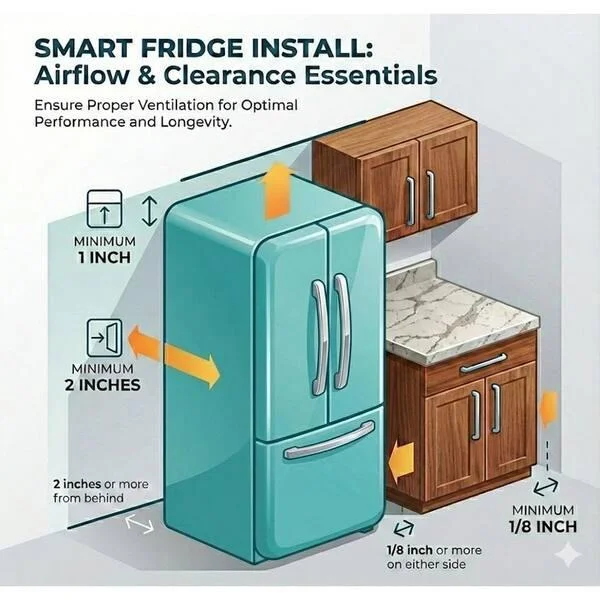
Also consider the surrounding room temperature. Some refrigerators aren’t designed for extremely hot garages or unheated spaces. Temperature changes outside the appliance can affect cooling performance depending on its design and operating range. Check the manufacturer’s environmental specifications before assuming the compressor has failed.
What If Your Refrigerator Compressor Runs but Doesn’t Cool?
The compressor is the central component of your refrigerator’s sealed cooling system. It circulates refrigerant through the condenser and evaporator coils to move heat away from stored food. When the compressor runs continuously without producing enough cooling, the problem may involve restricted airflow, refrigerant circulation, or damaged cooling components.
Pay attention to unusual humming, repeated clicking, excessive vibration, or long operating cycles. These symptoms can indicate a faulty start relay, damaged compressor, or another electrical issue. However, sound alone cannot confirm which component has failed. A technician should inspect the compressor and test its electrical connections before recommending replacement.
How to Recognize a Possible Compressor Problem
A refrigerator with a failing compressor may display several symptoms. The interior temperature might continue rising even though the appliance remains powered. You may also notice unusual heat around the lower rear section or repeated attempts to start the motor. These signs deserve professional attention because compressor replacement can involve substantial labor and parts costs.
Another possibility involves the refrigerant system rather than the compressor itself. A refrigerant leak, restricted capillary tube, or damaged evaporator can prevent normal heat transfer. Never attempt to recharge refrigerant or open sealed cooling lines yourself. A qualified technician must identify the fault and handle the refrigerant using appropriate equipment and procedures.
Why Is the Freezer Cold but the Refrigerator Warm?
This particular problem often confuses homeowners because the freezer appears to work normally. However, many refrigerators share a cooling system that distributes cold air between separate compartments. If the freezer produces cold air but the fresh food section remains warm, something may prevent that air from reaching the refrigerator compartment.
A defective evaporator fan, blocked air passage, or malfunctioning damper control can interrupt this distribution. Excessive frost may also cover the evaporator and restrict airflow. Check the freezer’s rear interior panel for unusual ice accumulation and make sure food packages aren’t blocking the vents. If these simple checks don’t help, arrange a professional inspection.
| Observed symptom | Possible explanation |
|---|---|
| Freezer cold, refrigerator warm | Evaporator fan or damper problem |
| Both compartments warm | Power, compressor, or sealed-system issue |
| Heavy freezer frost | Defrost system malfunction |
| Compressor runs continuously | Dirty coils, poor sealing, or cooling-system fault |
| Water around refrigerator | Clogged defrost drain or drainage issue |
| Unusual clicking sounds | Start relay or compressor-related fault |
These symptoms provide useful diagnostic clues rather than definite diagnoses. Several different component failures can produce similar behavior. A proper inspection helps identify the underlying cause without replacing parts unnecessarily.
When Should You Call a Professional Refrigerator Repair Technician?
Some refrigerator problems require more than household troubleshooting. If the appliance still struggles after checking its power supply, temperature settings, door gasket, condenser coils, and ventilation, the problem may involve internal electrical or mechanical components. A qualified technician can test the thermostat, temperature sensors, fan motors, defrost heater, start relay, and compressor.
Professional assistance becomes especially important when you notice burning smells, damaged wiring, repeated breaker trips, or unusual compressor noises. Switch off the appliance if you suspect an electrical hazard. Never open sealed refrigeration lines or attempt repairs involving live electrical components. These tasks require specialized tools, technical knowledge, and appropriate safety precautions.
What Repairs Usually Require Professional Attention?
A faulty evaporator fan motor may need replacement when it stops circulating cold air. Similarly, a defective temperature sensor can send incorrect readings to the electronic control board. A damaged defrost heater may cause recurring ice buildup. Each problem requires different testing procedures and replacement parts.
Refrigerant leaks and compressor failures require more advanced diagnosis. Refrigerant handling is subject to federal environmental regulations in the United States. Technicians performing regulated refrigerant work generally need the applicable EPA Section 608 certification. You can review the requirements through the EPA Section 608 Technician Certification program.
How to Protect Food When Your Refrigerator Stops Cooling
A cooling failure isn’t only an appliance problem. It can quickly become a food safety concern for your household. According to the USDA, refrigerated food should remain at 40°F or below to limit bacterial growth. When the refrigerator becomes too warm, perishable food can enter temperatures where harmful bacteria multiply rapidly. Therefore, monitor the actual internal temperature instead of judging food safety by touch or smell.
During a power outage, keep refrigerator and freezer doors closed as much as possible. An unopened refrigerator generally keeps food cold for approximately four hours. A full freezer can maintain its temperature for about 48 hours while a half-full freezer can manage approximately 24 hours. These estimates assume the doors remain closed.
| Situation | Recommended action |
|---|---|
| Refrigerator temperature is 40°F or below | Continue monitoring the temperature |
| Perishable food remains above 40°F for less than two hours | Refrigerate promptly if otherwise safe |
| Perishable food remains above 40°F for two hours or longer | Discard |
| Refrigerator loses power for four hours | Check temperatures and follow food safety guidance |
| Frozen food still contains ice crystals | It can generally be refrozen or cooked |
Never taste questionable food to determine whether it remains safe. Harmful bacteria don’t always change the food’s smell, appearance, or flavor. When necessary, consult the official FoodSafety.gov power outage food safety guide for specific storage and disposal recommendations.
How to Prevent Refrigerator Cooling Problems in the Future
Regular maintenance can reduce the chances of unexpected cooling failures. Dust accumulation, damaged door seals, blocked ventilation, and neglected cleaning often develop gradually. Fortunately, these issues are easier to manage when you inspect the appliance periodically. A simple maintenance routine also helps you recognize unusual noises, temperature changes, and frost accumulation before they become serious problems.
Pay particular attention to the refrigerator’s operating environment. Keep its ventilation openings clear and avoid placing hot cookware or uncovered warm food directly inside. Check the door gasket whenever you clean the appliance. Also, use an independent thermometer to confirm that the refrigerator consistently maintains a safe temperature. Follow your manufacturer’s instructions because maintenance requirements vary between models.
Recommended Refrigerator Maintenance Schedule
| Maintenance task | Suggested frequency |
|---|---|
| Check refrigerator temperature | Weekly |
| Inspect door gasket | Monthly |
| Clean interior shelves and drawers | Monthly or as needed |
| Check ventilation openings | Monthly |
| Clean accessible condenser coils | Every 6–12 months or as recommended |
| Inspect unusual noises and frost buildup | Whenever symptoms appear |
| Arrange professional maintenance | According to manufacturer guidance |
These intervals are general suggestions rather than universal manufacturer requirements. Some newer refrigerators have sealed condenser systems or specialized filtration components. Always consult your appliance manual before performing maintenance.
How Much Does Refrigerator Repair Cost in the USA?
Repair costs depend on the refrigerator’s age, brand, model, damaged component, and local labor rates. A simple adjustment or cleaning may cost very little when compared with replacing a compressor or repairing a sealed refrigeration system. However, homeowners should avoid choosing the cheapest estimate without understanding the proposed repair.
Before approving any work, ask for a written estimate that separates diagnostic fees, labor, replacement parts, and additional charges. Check whether the appliance remains under manufacturer warranty or an extended service agreement. Also, compare the estimated repair cost with the price of a suitable replacement refrigerator. This comparison becomes particularly important when dealing with older appliances.
| Type of repair | General cost consideration |
|---|---|
| Door gasket replacement | Usually a smaller repair |
| Condenser coil cleaning | Often a relatively inexpensive service |
| Evaporator fan replacement | Moderate parts and labor expense |
| Thermostat or sensor replacement | Depends on model and component |
| Defrost system repair | Varies with the failed component |
| Compressor replacement | Often a major repair |
| Sealed-system repair | Can involve substantial labor and equipment costs |
These categories indicate relative expense rather than verified national price quotations. Actual estimates vary considerably by location and appliance model. Request local quotes before making a financial decision.
Frequently Asked Questions About Refrigerator Cooling Problems
Why Is My Refrigerator Not Cooling but the Freezer Is Working?
This usually happens when cold air cannot circulate properly between the two compartments. A faulty evaporator fan, blocked air vent, damaged damper, or excessive frost can cause this problem. Check the air vents first. If airflow remains restricted, arrange a professional inspection.
How Long Should I Wait After Adjusting the Refrigerator Temperature?
Most refrigerators need several hours to respond to temperature adjustments. Allow approximately 24 hours for temperatures to stabilize before deciding whether the adjustment worked. Keep the doors closed during this period and monitor temperatures using an appliance thermometer.
Can Dirty Condenser Coils Stop a Refrigerator From Cooling?
Yes. Dirty condenser coils restrict heat transfer and force the cooling system to work harder. Severe buildup can contribute to overheating and poor cooling performance. Cleaning accessible coils according to manufacturer instructions can improve efficiency and restore normal operation when dirt is the underlying problem.
Why Does My Refrigerator Keep Running but Never Get Cold?
Continuous operation can indicate several problems. Dirty coils, damaged door seals, restricted airflow, faulty sensors, and refrigerant-system issues can all contribute. If basic maintenance doesn’t solve the problem, a technician should inspect the compressor and other cooling components.
Is It Worth Repairing an Older Refrigerator?
That depends on the repair estimate, appliance age, energy efficiency, and replacement cost. A relatively inexpensive fan or gasket replacement may make financial sense. However, expensive compressor or sealed-system repairs deserve careful comparison with the price of a new appliance.
Final Thoughts
A refrigerator that stops cooling doesn’t always need an expensive repair. Simple issues involving electrical connections, thermostat settings, dirty condenser coils, and blocked air vents can affect everyday performance. Checking these areas first helps narrow down the problem and prevents unnecessary replacement expenses.
However, persistent cooling failures deserve professional attention. Damaged compressors, defective fan motors, refrigerant leaks, and malfunctioning defrost systems require proper diagnosis. Don’t overlook food safety while troubleshooting. Keep your refrigerator at 40°F or below and discard perishable food when temperature exposure makes it unsafe.
With regular cleaning, proper ventilation, and occasional temperature checks, you can reduce the likelihood of unexpected breakdowns. Most importantly, address small warning signs before they develop into costly appliance failures.
Sources and Further Reading
The following authoritative and technical resources provide additional troubleshooting and food safety guidance.
| Source | Useful information |
|---|---|
| Whirlpool Refrigerator Troubleshooting | Manufacturer guidance for cooling problems |
| Frigidaire Refrigerator Repair Guide | Common cooling failures and component problems |
| iFixit Refrigerator Troubleshooting | Fan motors, sensors, and electrical components |
| USDA Refrigerator Temperature Guidance | Safe refrigerator and freezer temperatures |
| FoodSafety.gov Power Outage Guidance | Protecting food during refrigerator failures |
| EPA Section 608 Requirements | Refrigerant handling and technician certification |