Dryer Vent Fire Safety: Why Cleaning Isn’t Just About Efficiency
Most homeowners think of dryer vent cleaning as a way to dry clothes faster. Fire departments think of it very differently: as fire prevention. Understanding why turns a “someday” chore into a priority.
How many house fires do clothes dryers cause?
The U.S. Fire Administration reports dryers and washing machines as a recurring source of residential fires, with failure to clean the leading factor. The numbers make the case better than any warning label:
| Fact | Detail |
|---|---|
| Leading cause of dryer fires | Failure to clean lint and vents |
| Where fires start | Most often inside the dryer drum or vent duct |
| Peak season | Fall and winter, when dryers run more loads |
| Typical damage | Fires spread quickly through lint — one of the most flammable household materials |
Lint is essentially kindling. When airflow is restricted, the dryer’s heating element or burner runs hotter and longer, and it only takes one spark near a lint-clogged duct.
How does a clogged vent actually start a fire?
A clear vent pushes hot, moist air outside. A clogged vent traps that heat inside the duct and dryer cabinet. Temperatures climb, lint bakes onto the duct walls, and the thermal fuse — the dryer’s last line of defense — can fail after repeated overheating cycles. At that point, any spark or sustained high heat can ignite the lint lining the duct like a fuse leading straight into your laundry room wall.
7 warning signs your vent is a fire risk right now
| Warning sign | What it means |
|---|---|
| Burning smell during a cycle | Lint may be scorching near the heating element — act immediately |
| Dryer cabinet is hot to the touch | Heat isn’t escaping through the vent |
| Clothes need 2+ cycles | Severe airflow restriction |
| Lint around the exterior vent hood | Duct is backing up |
| No airflow felt at the exterior vent while running | Near-total blockage |
| It’s been 12+ months since cleaning | Overdue by every manufacturer standard |
| Flexible foil or plastic ducting | Flammable material — replace with rigid metal duct |
If you notice a burning smell, stop the dryer immediately and don’t restart it until the vent is inspected.
How often should the vent be cleaned?
| Household | Recommended frequency |
|---|---|
| 1–2 loads per week | Every 12 months |
| 3–5 loads per week | Every 6–9 months |
| Daily use / large family | Every 6 months |
| Pets that shed | Every 6 months |
| Vent run over 15 feet or with bends | Every 6 months regardless |
What does a professional fire-safety cleaning include?
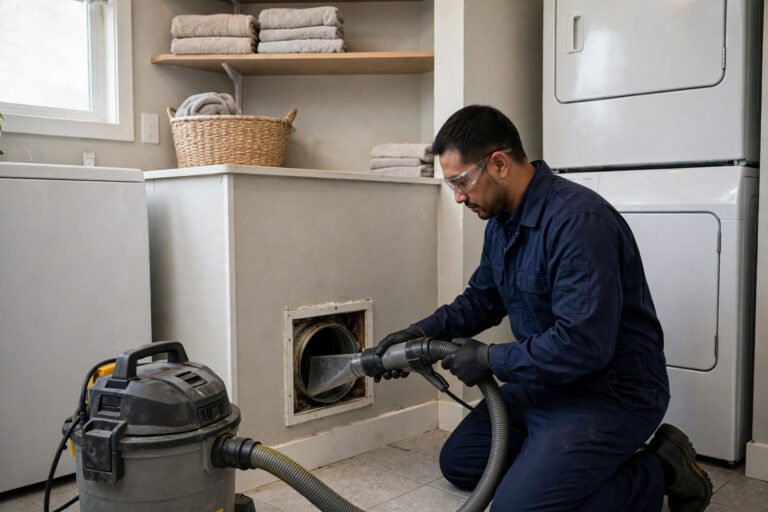
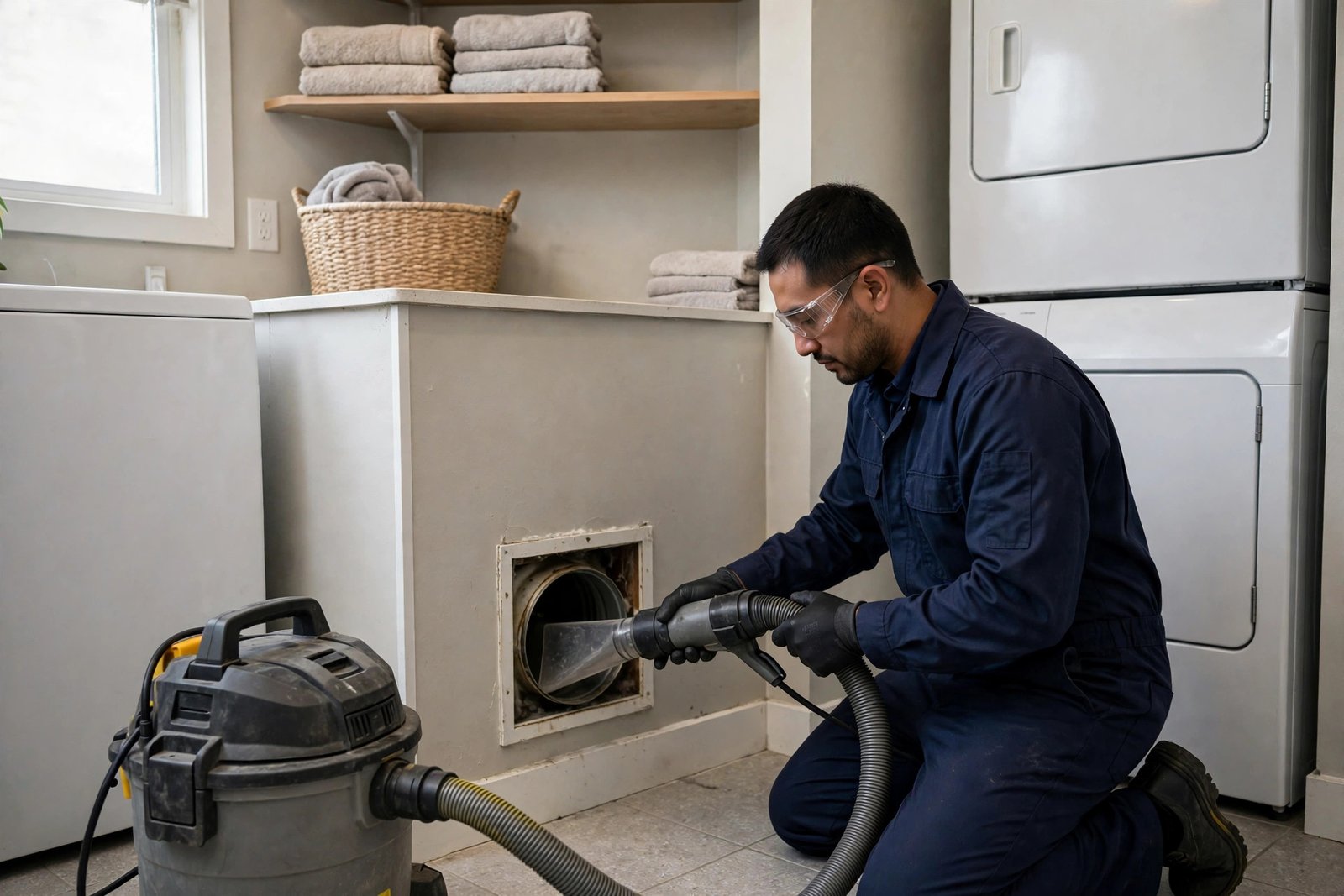
A proper service goes beyond brushing lint: full-length duct cleaning with rotary tools and high-powered vacuum, inspection of the entire run for crushed or disconnected sections, checking the exterior vent cap for blockages, and replacing flammable flexible ducting with rigid metal where needed. It typically takes under an hour.
The bottom line
Dryer vent cleaning isn’t appliance maintenance — it’s home safety maintenance. Put it on the same list as smoke detector batteries: once or twice a year, without fail.
Serving Columbia, Ellicott City, Elkridge, Laurel, Jessup, Savage, Fulton, Glenelg, and Catonsville — book your dryer vent safety cleaning.