Refrigerator Not Cooling? 7 Common Causes and What to Do
A warm fridge is an emergency — every hour counts for the food inside. Before you panic (or buy a new one), run through these seven causes in order. The first three you can check yourself in minutes.
Quick diagnosis table
| Symptom | Most likely cause | DIY or pro? |
|---|---|---|
| Fridge and freezer both warm | Thermostat setting, power, or compressor | Start DIY, may need pro |
| Fridge warm, freezer fine | Evaporator fan or damper issue | Usually pro |
| Runs constantly but never cold enough | Dirty condenser coils | DIY |
| Clicking sound, then shuts off | Failing compressor start relay | Pro |
| Frost buildup in freezer, warm fridge | Defrost system failure | Pro |
| Water pooling under the fridge | Blocked defrost drain | DIY possible |
1. Check the thermostat and power first
It sounds obvious, but thermostats get bumped and breakers trip. Confirm the fridge is set to 37–40°F (3–4°C) and the freezer to 0°F (-18°C). Make sure the unit is plugged in firmly and the outlet has power. If the interior light is on but nothing is cooling, power isn’t the issue — move on.
2. Clean the condenser coils
Dirty coils are the #1 cause of poor cooling that owners can fix themselves. Coils (usually underneath or behind the fridge) collect dust and pet hair, which traps heat the fridge is trying to expel. Unplug the unit, pull it out, and vacuum the coils with a brush attachment every 6–12 months. Many “dying” refrigerators come back to life after this alone.
3. Test the door seals
Weak seals let cold air leak out around the clock. Close the door on a dollar bill at several points around the seal — if it slides out easily, the gasket isn’t sealing. Clean dirty gaskets with warm soapy water first; if they’re cracked or warped, they need replacing.
4. Clear blocked air vents
Cold air circulates from the freezer to the fridge compartment through vents. Overpacking — especially tall items pressed against the back wall — blocks that airflow. Rearrange so vents are clear and give the fridge a few hours to recover.
5. Listen for the evaporator fan
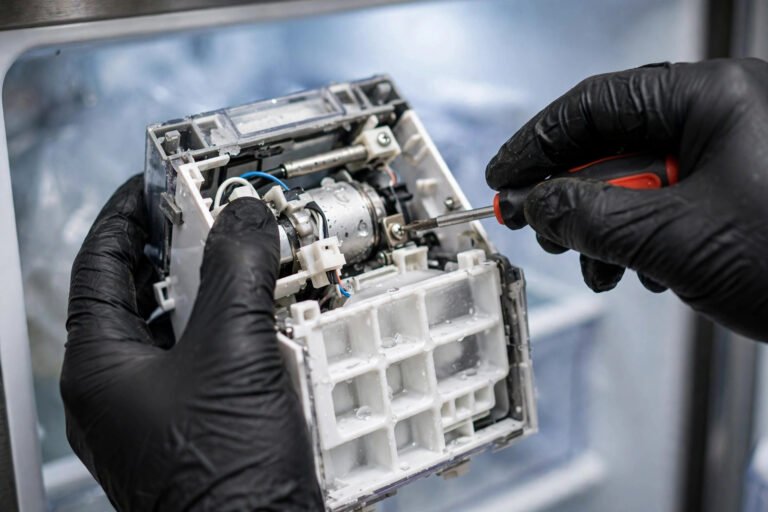
Open the freezer door and listen. You should hear a fan running. If it’s silent (or making grinding noises), the evaporator fan motor has likely failed — cold air can’t circulate, and this needs a technician.
6. Defrost system failure
If the freezer has heavy frost buildup while the fridge compartment stays warm, the automatic defrost system (heater, thermostat, or timer) has failed. Ice chokes the evaporator coils and blocks airflow. This is a pro repair — it requires testing electrical components.
7. Compressor problems
The compressor is the heart of the fridge. Signs of trouble: a clicking sound followed by silence (failed start relay — a relatively cheap fix), or the compressor running hot without cooling (possible refrigerant or compressor failure — expensive). Compressor repairs are where the “50% rule” matters most: if the repair costs more than half the price of a comparable new fridge, replacement usually wins.
When to call for refrigerator repair in Columbia, MD
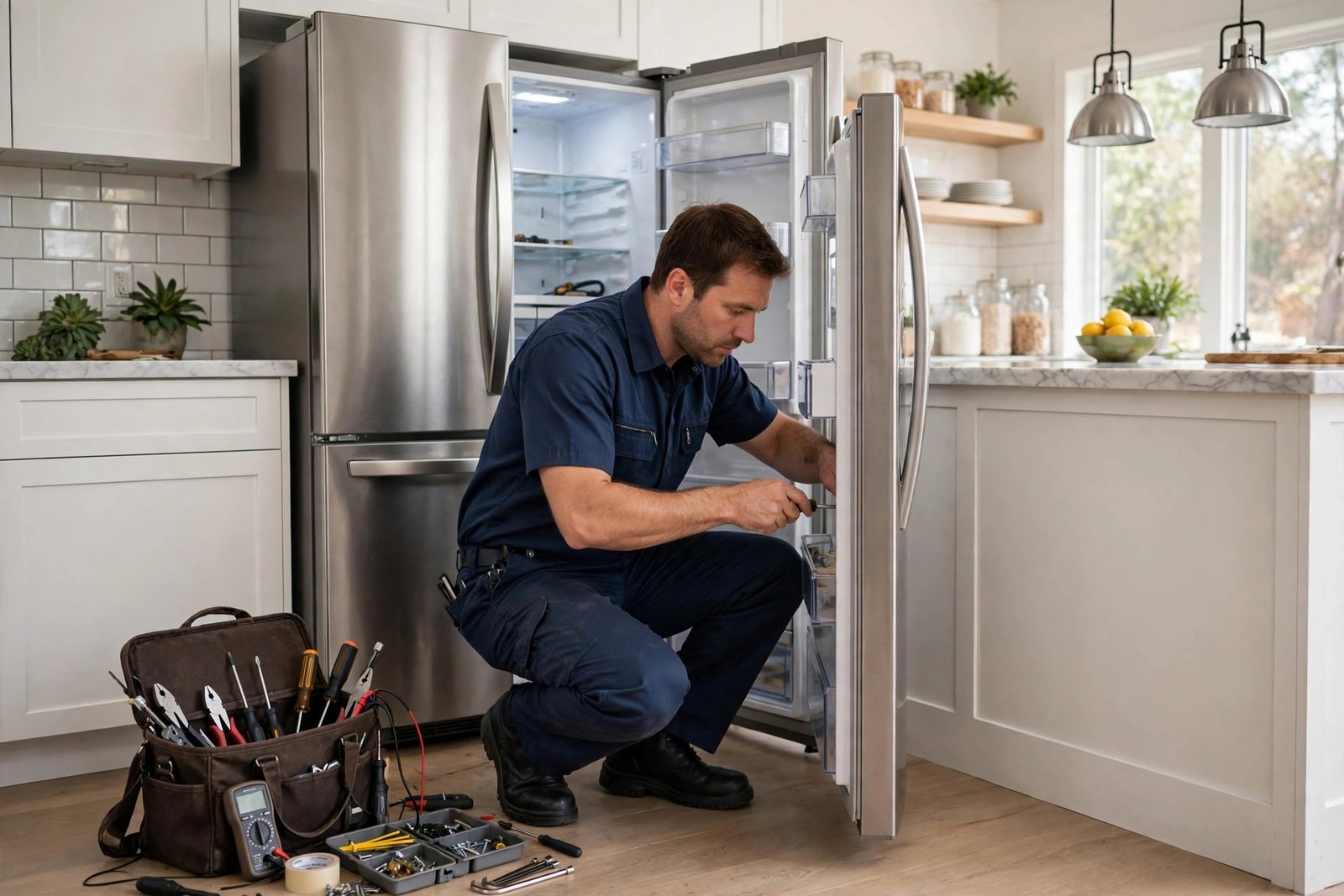
Call a technician if: you’ve cleaned the coils and checked seals with no improvement, you hear clicking or grinding, there’s heavy frost buildup, or the fridge is over 10 years old with a suspected sealed-system problem. For food safety, don’t wait more than a few hours — move perishables to a cooler with ice packs while you wait.
Same-day refrigerator repair across Columbia, Ellicott City, and Howard County — schedule your repair.